
Pacific Knotworks
Kona Christmas Crafts Fair
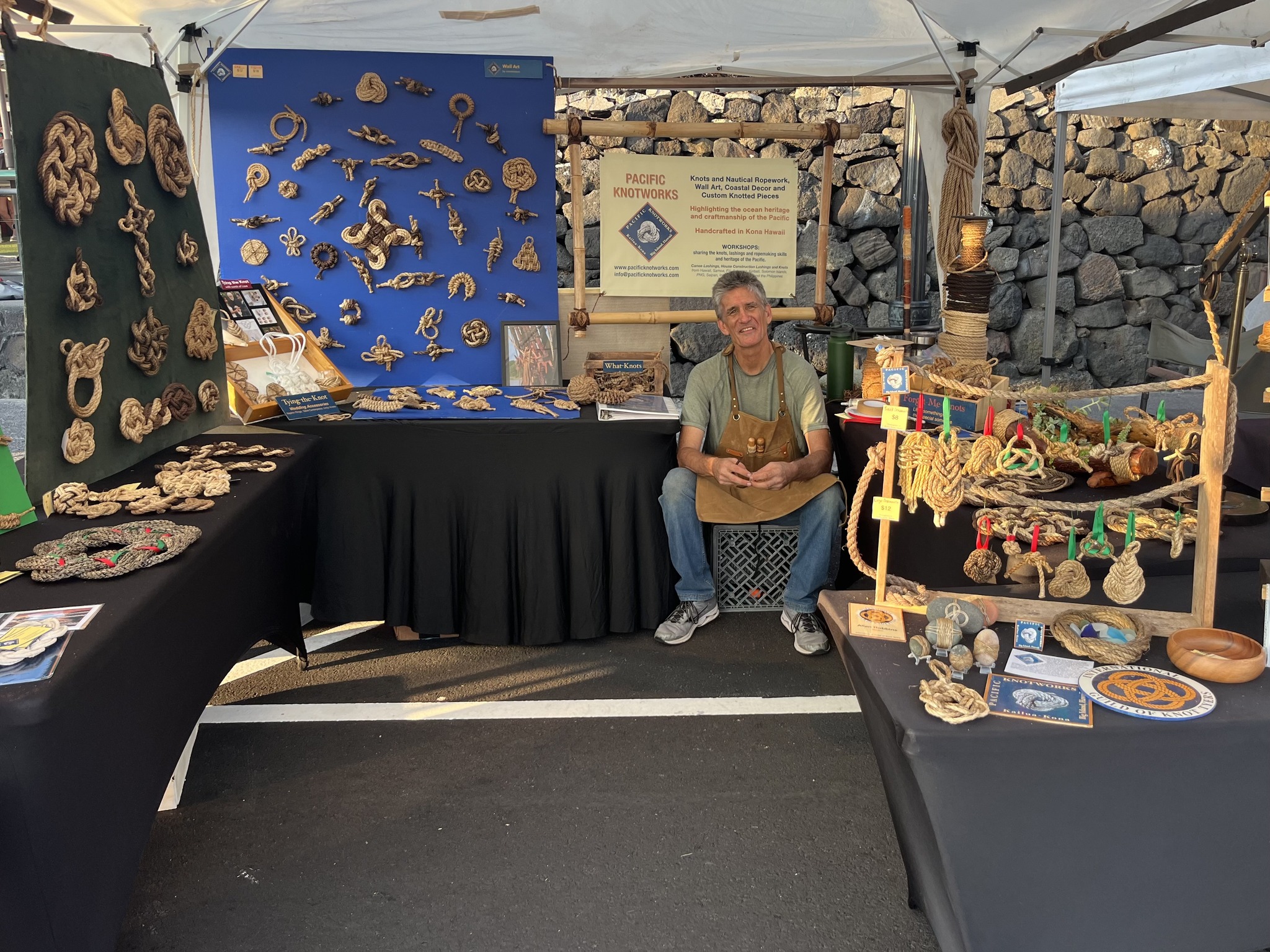
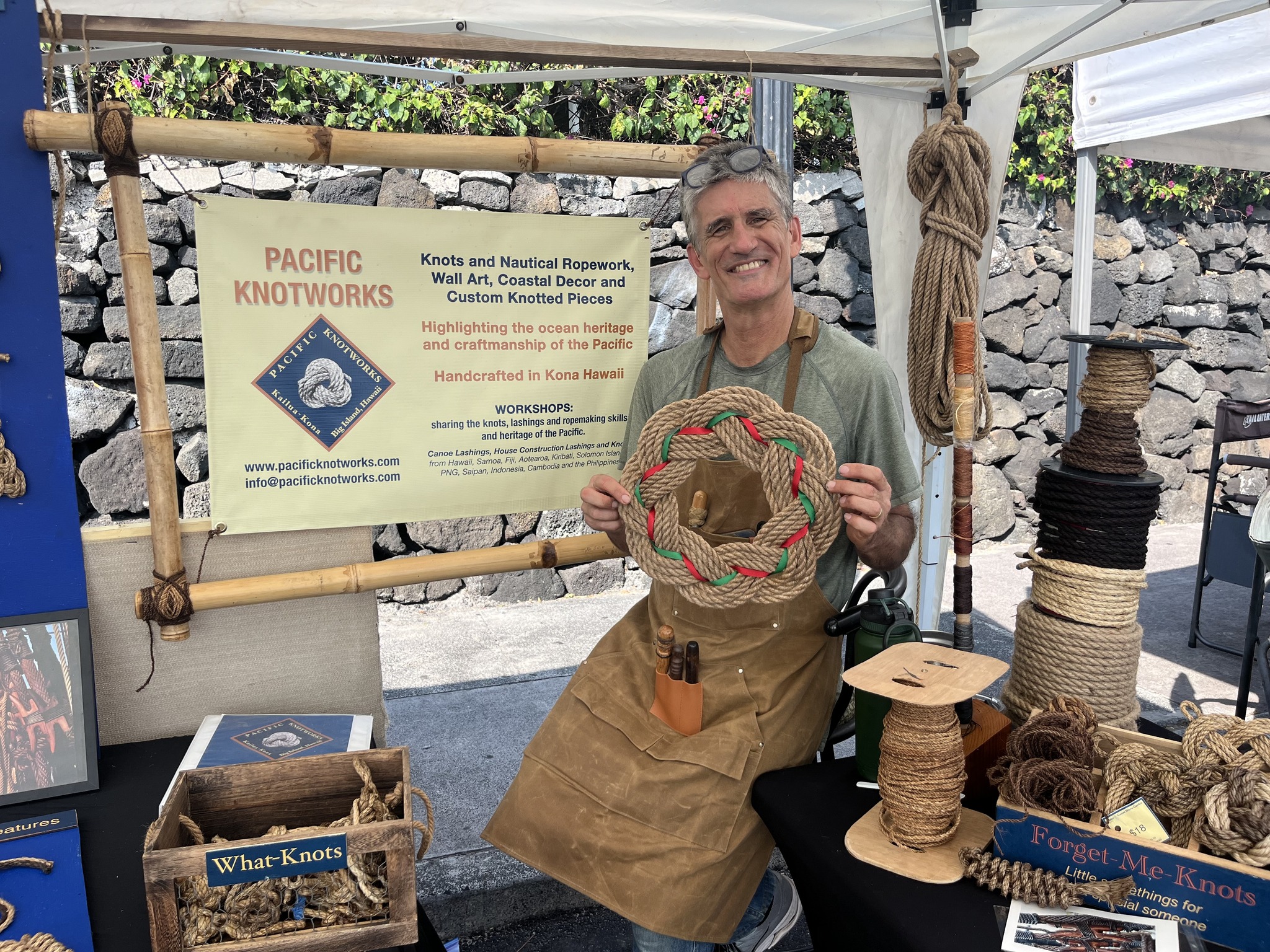
Lots of fun this afternoon with a tent at the Kona Alii Drive Craft Market. Had wondered if there was interest in Knots & Ropework, one of my life passions, but turned out…there was! Met lots of interesting people, had lots of interesting conversations. Out of 115 venders, I was the only one selling Christmas Knots, but you already knew I was a bit strange that way.
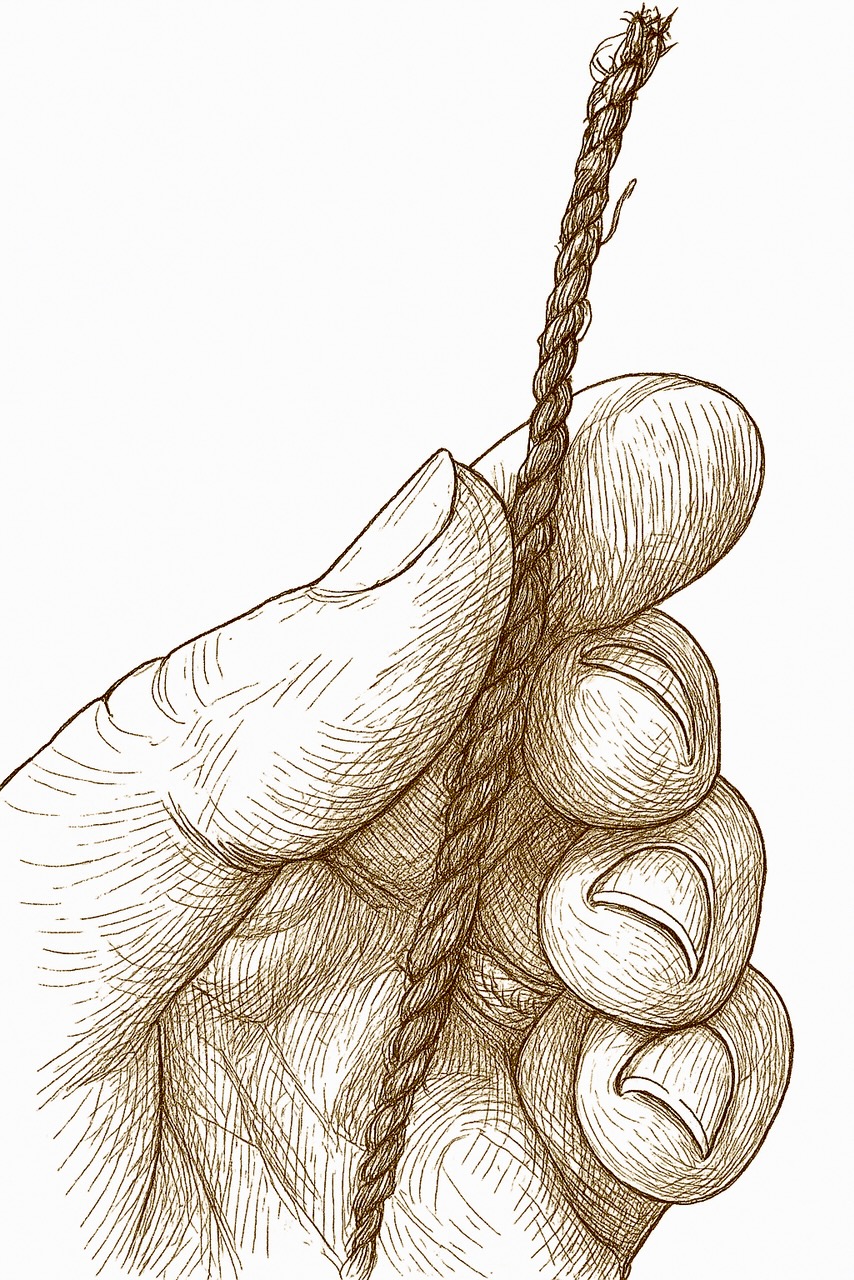
Coconut-fiber cord. (Sennit)
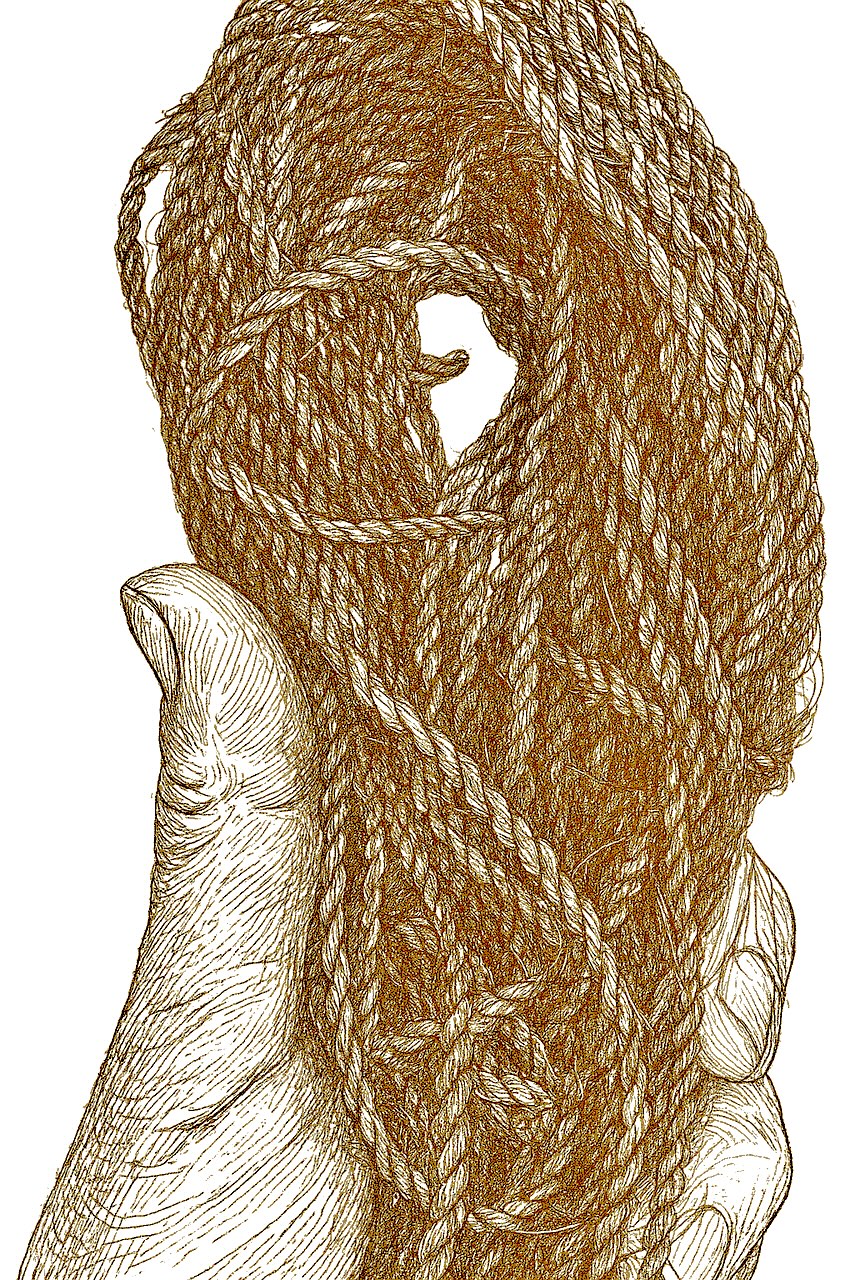
In every culture, making durable rope has been one of human’s earliest and most import skills.
It starts with rope
Across every coastline, forest, desert, and island on Earth, humans have always turned to one humble but vital technology: natural-fiber cordage. Long before metal tools, engines, or electricity, twisted plant fibers held our world together—quite literally. Rope, cord, and sennit (plaited or braided fiber) are some of humanity’s oldest engineered materials, and every culture developed its own distinctive techniques using the resources at hand.
Early cordage was made from whatever local plants offered strength and flexibility: bark from linden trees in Europe, flax and hemp in the Mediterranean, papyrus along the Nile, coconut husk fibers (coir) throughout the Pacific, yucca and agave in the Americas, ramie and mulberry bast in East Asia. These fibers were gathered, retted, scraped, dried, and twisted into lines that powered daily life. With them people built shelters, secured tools, hauled water, launched canoes, navigated vast oceans, fished, hunted, traded, and performed ceremony.
Some of the world’s most iconic achievements depended on simple fiber rope. The stones of Egyptian pyramids were lifted and hauled with flax and palm rope. In the Andes, Inca engineers built entire suspension bridges—woven from braided grass—that lasted for centuries. Across Polynesia, expertly crafted coir sennit bound together voyaging canoes that crossed thousands of miles of open ocean. In Japan, sacred shimenawa ropes of rice straw marked holy spaces. In Europe, tarred hemp rigging powered the great Age of Sail.
Cordage wasn’t only practical—it carried meaning. Many cultures used intricately braided cords and knots in rituals, marriages, funerals, and leadership ceremonies. Sennit could signify rank, identity, or spiritual protection. The materials themselves were expressions of place: forest, mountain, wetland, or reef.
Today, synthetic ropes dominate industry, but natural fiber cordage still resonates. It’s renewable, biodegradable, and deeply tied to cultural heritage. For craftspeople, sailors, archaeologists, and anyone drawn to traditional skills, working with natural fiber is a link back to the hands of our ancestors. Every twist and braid tells a story of ingenuity, environment, and human connection.
In a world moving fast, natural cordage reminds us of the strength that comes from simple materials, patient hands, and generations of shared knowledge.